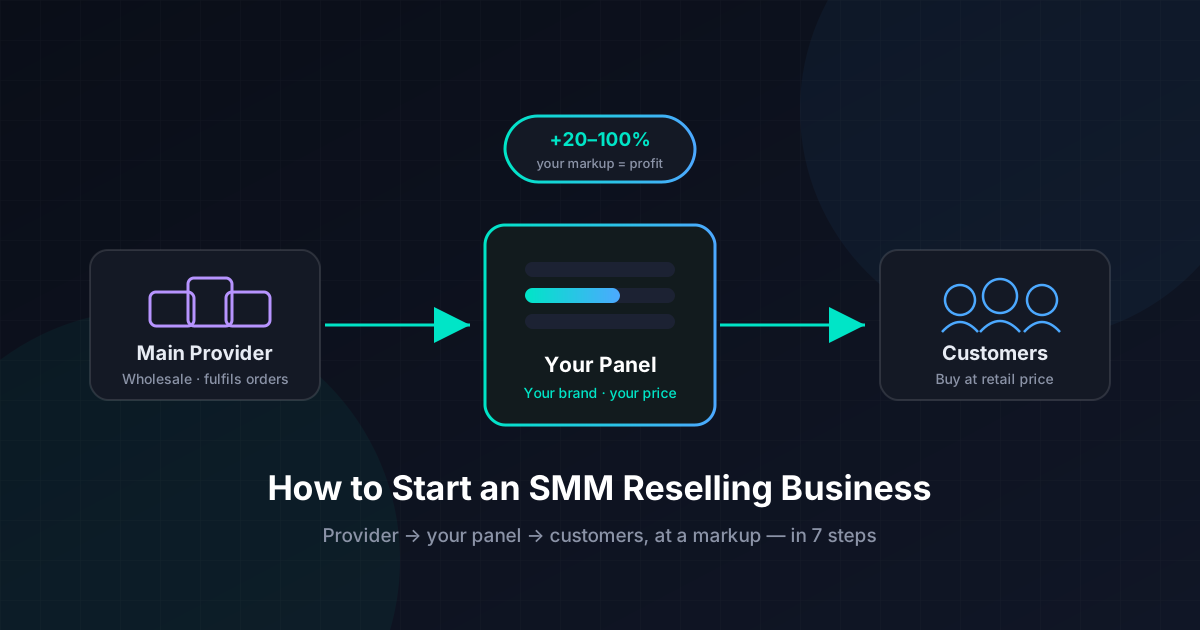
An SMM reselling business buys social media marketing services wholesale from a main provider and resells them to end customers at a markup, usually through your own branded panel. To start one in 2026, you pick a reliable provider, set up a child panel or your own site, mark up services for profit, accept payments (including crypto), and — the part most guides skip — actually get your first customers. Here are the seven steps.
- Understand how SMM reselling works
- Choose your model: child panel vs your own panel
- Vet and connect a main provider (API)
- Price your services for a sustainable margin
- Set up payments, including crypto
- Get your first customers
- Retain customers with refills, support, and quality control
Table of Contents
- What Is an SMM Reselling Business?
- What You Need Before Starting
- Step 1 — Understand How SMM Reselling Works
- Step 2 — Choose Your Model: Child Panel vs Your Own Panel
- Step 3 — Vet and Connect a Main Provider
- Step 4 — Price Your Services for Profit
- Step 5 — Set Up Payments (Including Crypto)
- Step 6 — Get Your First Customers
- Step 7 — Retain Customers With Refills and Support
- Is SMM Reselling Profitable in 2026?
- FAQ
Key Takeaways
- An SMM reseller buys services wholesale from a main provider and resells them at a markup.
- A child panel lets you start in a day for $10–$50; your own panel costs more but keeps full margin.
- Typical reseller markups run 20–100%, depending on service and volume.
- The hardest part is not building the panel — it is getting the first customers.
- In 2026, directory listings and AI-search visibility (GEO) are underused acquisition channels.
What Is an SMM Reselling Business?
An SMM reseller sits between a large wholesale provider and everyday buyers. The provider runs the actual delivery infrastructure — the servers, accounts, and bot or engagement networks that fulfill orders like followers, likes, and views. You buy those services at wholesale rates through an API, list them on your own panel at a higher price, and keep the difference. If you are new to how that fulfillment works, start with our primer on what an SMM panel is and how it works.
The model works because end customers rarely have access to wholesale providers, and they value a clean storefront, local payment options, and responsive support over raw price. The global social media management market was valued in the low billions of dollars and is projected to keep growing at a double-digit compound annual rate through the decade, according to market trackers such as Grand View Research. Reselling is one of the lowest-capital ways to participate in that demand.
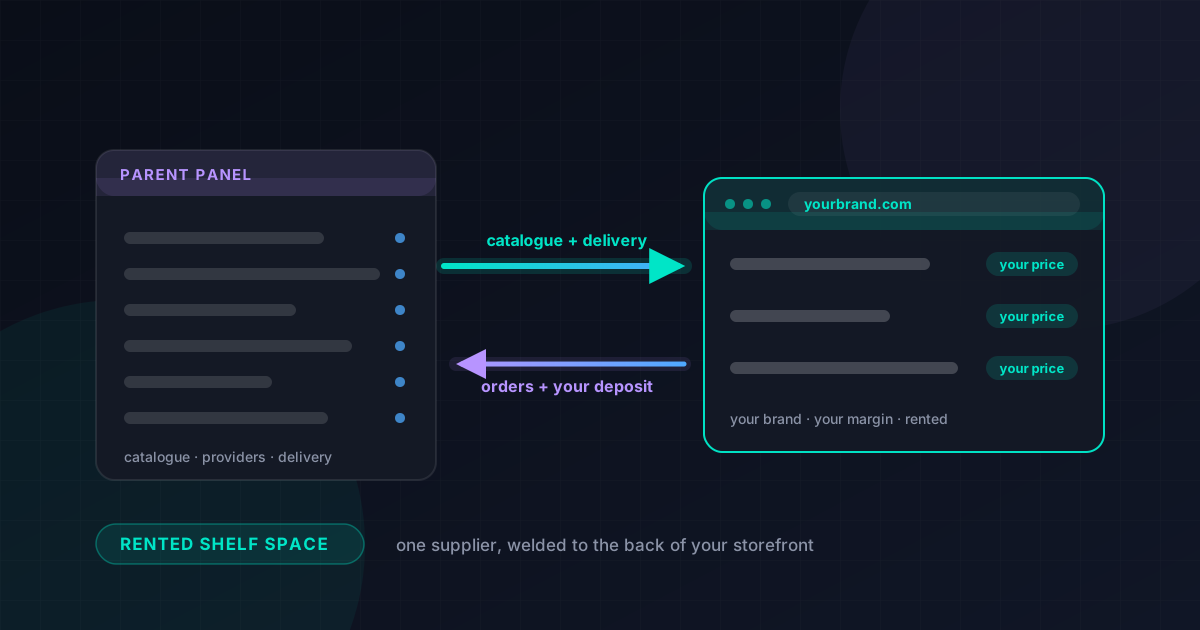
There are two common structures. A child panel is a ready-made, white-label copy of a provider’s panel — you get a storefront and their full service catalog, and they handle fulfillment. Running your own panel (typically built on PerfectPanel or similar software) gives you full control and full margin, but you connect providers yourself and manage more of the stack.
What You Need Before Starting
You can start an SMM reselling business with very little. The practical checklist:
- Budget: $10–$50 for a child panel, or roughly $50–$200 for your own panel plus a domain and hosting.
- A niche or platform focus: Instagram, TikTok, YouTube, Telegram, or Spotify services all have distinct buyer bases.
- A reliable main provider with an API and a real refill policy.
- A payment method buyers actually use — cards, PayPal alternatives, and increasingly cryptocurrency.
- A plan to get customers, which most beginners skip and then wonder why orders never come.
You do not need to be a developer. Child panels require zero code, and panel software like PerfectPanel installs on standard hosting.
Step 1 — Understand How SMM Reselling Works
What to Do
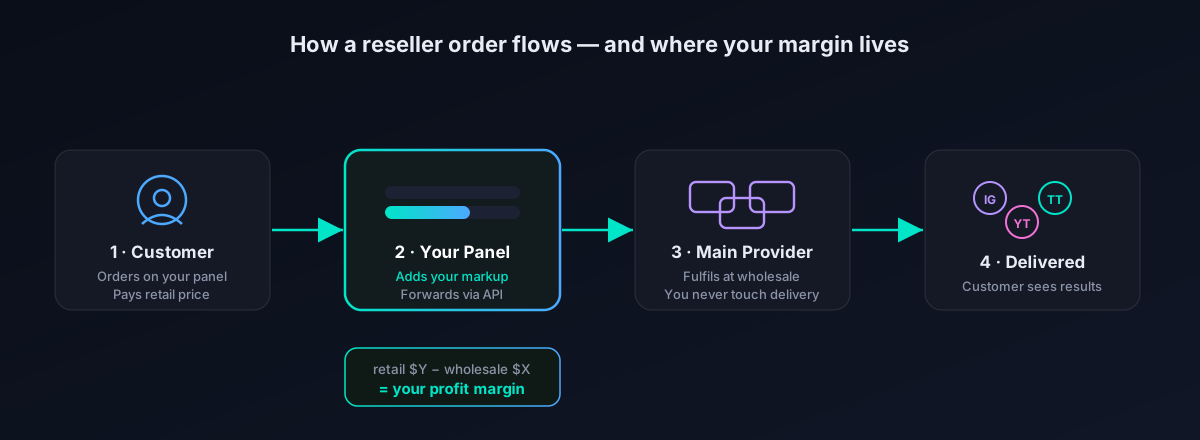
Map the supply chain before spending a cent. Orders flow like this: a customer places an order on your panel → your panel forwards it to your main provider via smm panel api → the provider fulfills it → your panel marks it complete. You never touch delivery; you own the storefront, pricing, and customer relationship.
Why This Matters
Understanding this flow tells you where your money and your risk actually sit. Your margin comes from the price gap. Your risk comes from provider reliability — if the provider fails to deliver or refill, the complaint lands on you, not them.
Common Mistakes to Avoid
- Confusing “cheap” with “profitable”: the cheapest provider often has the worst refill rates, which costs you more in refunds and reputation than you save.
- Skipping the terminology: if you cannot explain drip-feed, non-drop, and refill to a customer, you cannot support them.
Step 2 — Choose Your Model: Child Panel vs Your Own Panel
What to Do
Pick based on budget and how much control you want.
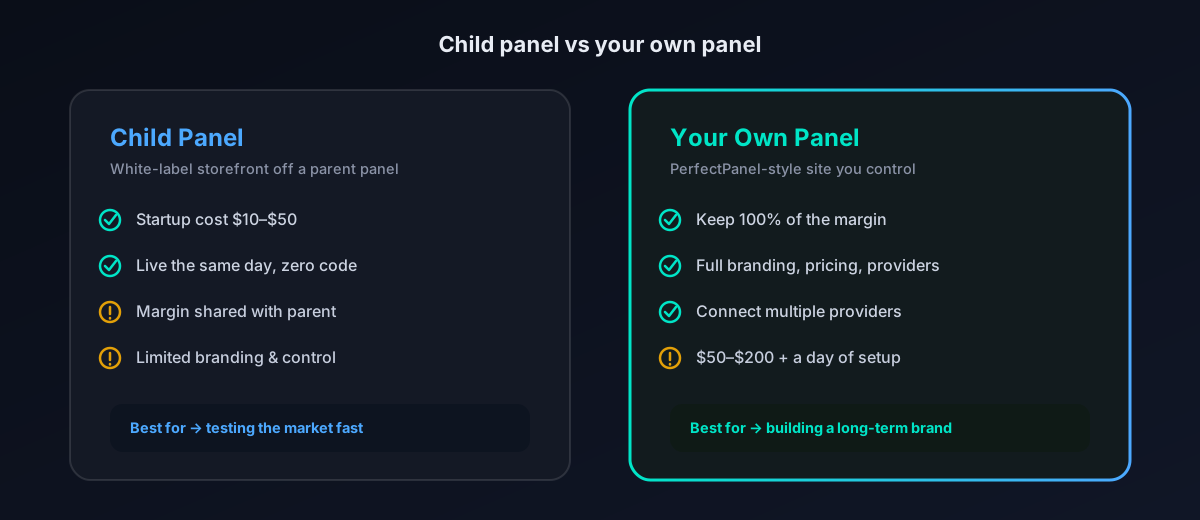
| Factor | Child Panel | Your Own Panel |
|---|---|---|
| Startup cost | $10–$50 | $50–$200+ |
| Setup time | Same day | 1–3 days |
| Services | Inherited from parent | You connect any provider |
| Margin | Shared with parent | You keep all of it |
| Control | Limited | Full (branding, pricing, providers) |
| Best for | Testing the market fast | Building a long-term brand |
Why This Matters
A child panel is the fastest way to validate that you can sell at all, with almost no risk. Once you have steady orders, migrating to your own panel lets you connect multiple providers, protect margins, and build a brand that appears in search and directories.
Common Mistakes to Avoid
- Over-investing before validating: do not build a fully custom panel before you have sold a single order.
- Under-investing forever: staying on a child panel long-term caps your margin and your brand equity.
Step 3 — Vet and Connect a Main Provider
What to Do
Your provider is the single biggest determinant of whether customers stay. Before connecting one via smm panel api, run this vetting checklist:
- Place a $5 test order on every service you plan to resell before trusting the provider with real customer volume.
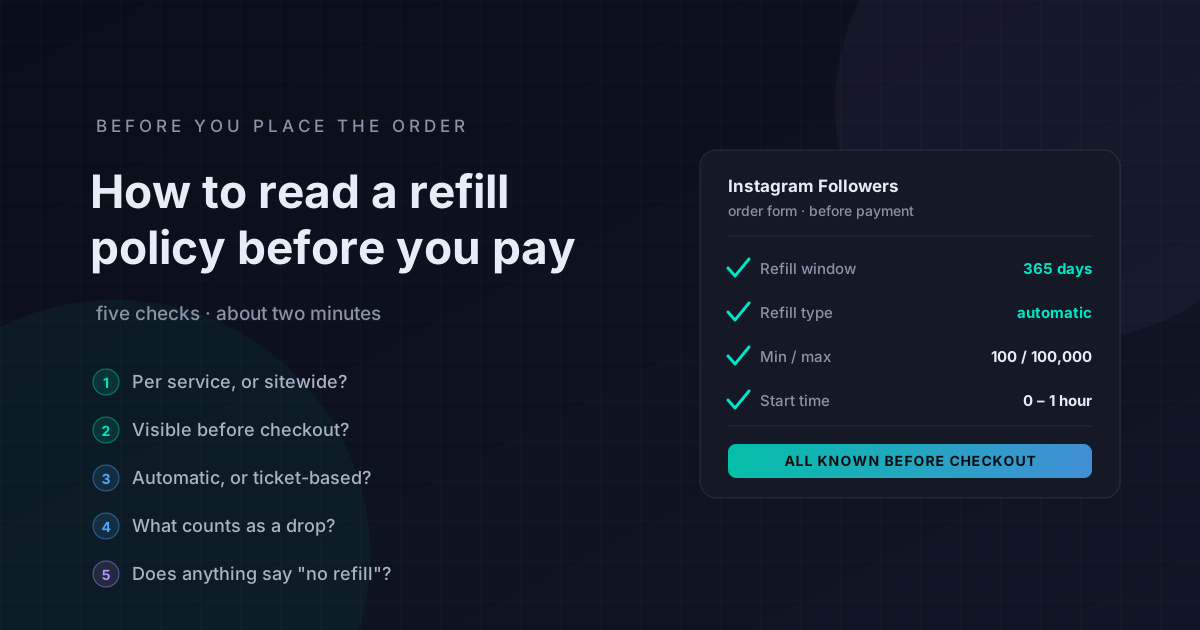
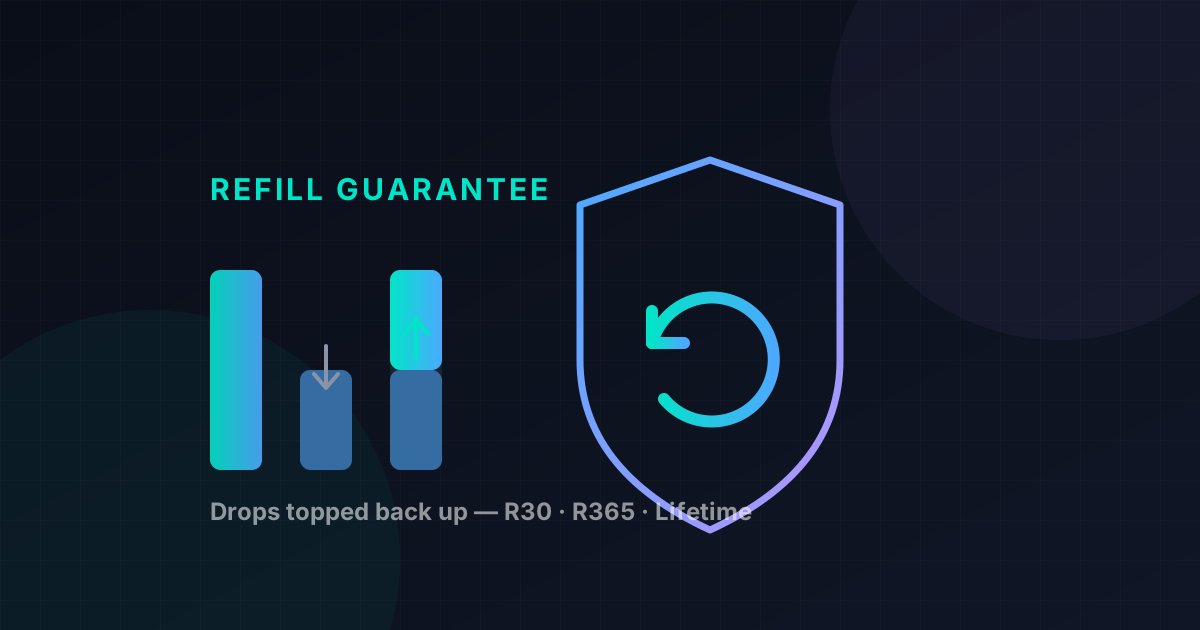
- Confirm the refill and non-drop policy in writing, and test it by ordering a service with a refill guarantee.
- Check delivery speed and drip-feed options for natural-looking growth.
- Verify API uptime and whether order status syncs reliably.
- Read independent feedback in reseller communities such as Reddit’s r/SMMPanels before committing.
The price floor tells you which supply tier you are buying into, and the gap is enormous. In our own directory, FansGurus lists 4,800+ services starting at $0.0003 per 1,000 — automated supply, priced accordingly — while SMMfoxi, which sells itself on human delivery, starts at $25 per 1,000. Both are certification-tested panels on this site; the 80,000x spread between their floors is not a discount, it is a different product. Resell from the tier your customers actually expect.
Why This Matters
A provider that looks cheap but drops 30% of followers within a week will destroy your refund rate and your reviews. Before you commit, learn to tell real engagement from bot supply, and read up on the legality and account risks you are passing to buyers. Testing with $5 before scaling to $500 is the single highest-ROI habit in this business.
Common Mistakes to Avoid
- Relying on one provider: if it goes down, your whole panel goes down. Line up a backup for critical services.
- Ignoring refill terms: “cheap and no refill” is more expensive than “slightly pricier with a 30-day refill.”
Step 4 — Price Your Services for Profit
What to Do
Set your smm reseller profit margin deliberately. Common markup ranges run 20% to 100% over wholesale, depending on service type and competition. High-volume commodity services (like generic views) carry thin margins; specialized or high-retention services support fatter ones. For the mechanics behind why identical services vary so widely, compare the same service across panels in our cross-panel service search.
A simple starting formula:
Retail price = wholesale cost × (1 + target margin) + payment processing fee
Reinvest early profits rather than pocketing them, so you can afford refills and the occasional refund without going underwater.
Why This Matters
Price too high and you lose to competitors; price too low and refills eat your margin. Most sustainable resellers land in the 30–60% markup band on mid-tier services and use a few loss-leader services to attract first-time buyers.
Common Mistakes to Avoid
- Racing to the bottom: competing purely on price attracts the least loyal customers and the thinnest margins.
- Forgetting fees: payment processing and crypto conversion costs quietly erode margin if not priced in.
Step 5 — Set Up Payments (Including Crypto)
What to Do
Offer at least two payment paths. Cards and mainstream processors serve most buyers, but many SMM customers are international and increasingly prefer crypto, which settles fast and sidesteps chargebacks. Accepting stablecoins or major coins removes friction for a large slice of the global buyer base.
Why This Matters
Chargebacks are a real threat in this industry because a minority of buyers dispute completed digital orders. Crypto payments are effectively final, which protects your revenue. Offering crypto also signals that you serve a global, tech-comfortable audience — a competitive edge in 2026.
Common Mistakes to Avoid
- Card-only checkout: you lose international buyers who cannot or will not use cards.
- No refund policy: publish a clear, narrow refund policy so disputes have a defined path.
Step 6 — Get Your First Customers
This is the step nearly every other guide ignores — and the reason most new panels die with zero orders. A working panel is not a business until someone buys. In 2026, the highest-leverage acquisition channels for a new reseller are:
- Get listed in SMM directories and comparison sites. Buyers actively search directories to find and compare panels. A listing on a directory that ranks in search and is cited by AI answer engines puts you in front of buyers at the exact moment they are choosing a panel. Getting into a searchable SMM panel directory — or the organic-supply panel directory if you sell real-user services — gives a new panel an SEO-optimized, AI-citable storefront from day one.
- Be findable in AI search (GEO). When someone asks ChatGPT or Perplexity for “a reliable SMM panel that takes crypto,” the panels that get named are the ones with structured, citable content and directory presence. Optimizing for Generative Engine Optimization is a 2026 acquisition channel most resellers have not touched yet — here is how to promote an SMM panel across nine channels, AI answer engines included.
- Engage niche communities. Reddit threads, Telegram groups, and platform-specific forums are where early buyers ask for recommendations. Provide genuine answers, not spam.
- Offer a low-friction first order. A cheap, high-quality entry service converts browsers into first-time buyers you can then retain.
Why This Matters
Traffic is the constraint, not technology. Anyone can install a panel in an afternoon; almost no one plans distribution. Solving acquisition first — before over-investing in a custom build — is what separates panels that earn from panels that sit empty.
Step 7 — Retain Customers With Refills and Support
What to Do
Retention is where the real profit lives, because acquiring a customer costs far more than keeping one. Deliver on refill guarantees, respond to tickets quickly, and use drip-feed to keep growth looking natural. Track which services generate the most refill requests and quietly drop or replace the worst performers.
Why This Matters
A reseller with a 40% repeat-order rate is far more valuable than one chasing endless new buyers. Reliable refills and fast support turn one-time buyers into recurring revenue.
Common Mistakes to Avoid
- Ghosting on support: slow or absent support is the number-one reason SMM customers switch panels.
- Ignoring quality drift: a provider’s quality can degrade over time — re-test periodically.
Is SMM Reselling Profitable in 2026?
SMM reselling can be profitable in 2026, but the margin lives in provider reliability, smart pricing, and customer acquisition — not in the panel software itself. Startup costs are low ($10–$200), markups of 20–100% are normal, and demand for social proof keeps growing with the creator economy. The businesses that fail almost always fail on distribution, not technology: they build a panel, list a catalog, and never plan how buyers will find them. Solve acquisition and retention, and the model works.
Frequently Asked Questions
How much does it cost to start an SMM reselling business?
You can start for as little as $10–$50 with a child panel, which requires no coding. Running your own panel on software like PerfectPanel typically costs $50–$200 including a domain and hosting, plus whatever you load as balance with your main provider to fulfill early orders.
Is SMM reselling legal?
Reselling social media marketing services is generally legal, but it can violate the terms of service of individual social platforms. Buyers assume the account risk. Keep your business compliant by being transparent, offering refunds, and avoiding fraudulent claims about guaranteed results.
What is the difference between a child panel and a main provider?
A main provider owns the fulfillment infrastructure and sells services wholesale. A child panel is a white-label reseller storefront connected to that provider. As a reseller you can start with a child panel, then graduate to your own panel connected directly to one or more main providers.
How do I get customers for a new SMM panel?
Get listed in SMM directories and comparison sites, optimize for AI search visibility (GEO), engage authentically in niche communities like Reddit and Telegram, and offer a cheap high-quality first order. Distribution — not panel software — is the real constraint for new resellers.
Conclusion
Starting an SMM reselling business in 2026 is a low-capital, seven-step process: understand the model, choose a child panel or your own panel, vet a reliable provider, price for a real margin, accept payments including crypto, get your first customers, and retain them with refills and support. The technology is the easy part — a panel goes live in an afternoon. Your next concrete step is to pick one platform niche, place a $5 test order with two providers, and secure a directory listing so buyers can actually find you.