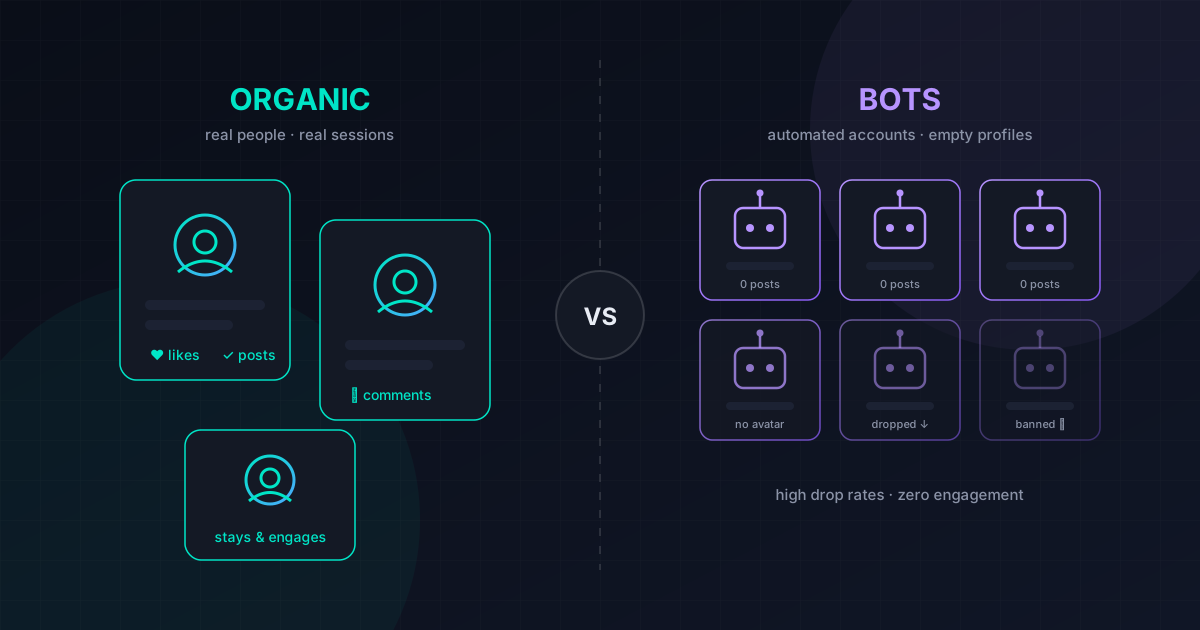
Organic SMM services are engagement actions — follows, likes, comments, views — performed by real people with active accounts, usually sourced through engagement communities or reward platforms. Bot services simulate the same actions with automated accounts. Both are sold side by side on SMM panels, frequently under identical-looking listings, at prices that differ by 5–20x.
The label on the listing will not tell you which one you are buying. "Real," "HQ," and "non-drop" are marketing words, not guarantees. What does reliably separate the two is arithmetic, delivery behavior, and account evidence — and that is what this guide teaches you to read. The patterns below come from delivery data and verification checks across the 5,200+ services tracked on SMMCollection.
Key takeaways
- "Organic" means real humans acted; bots mean scripts acted. Listings rarely say which honestly.
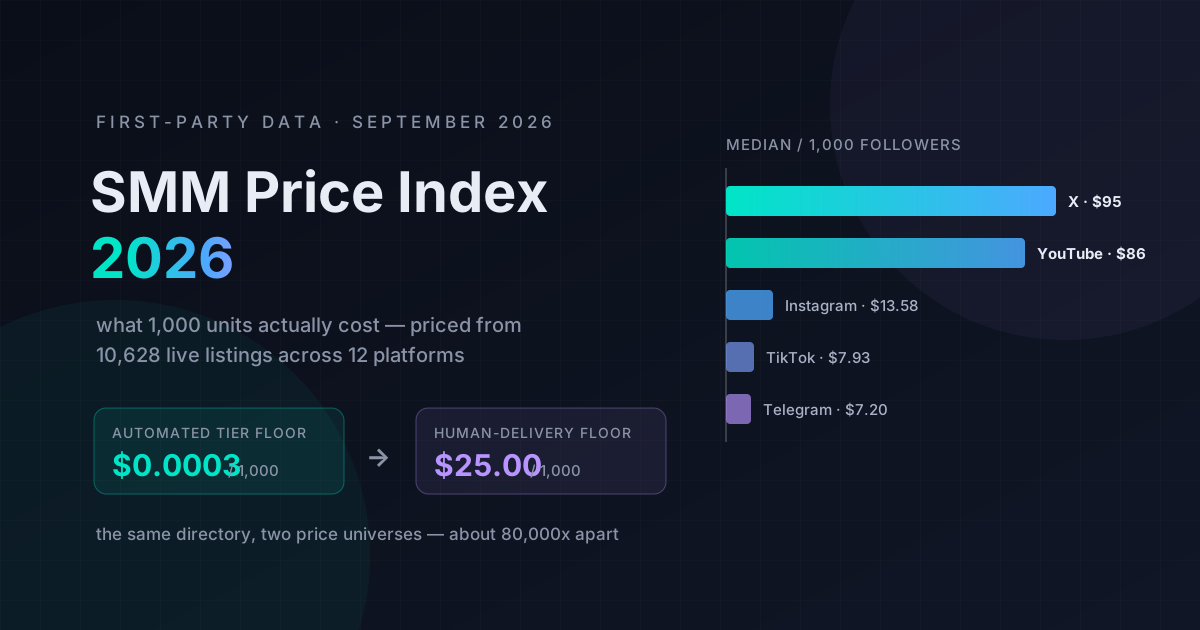
- Price floors expose supply: 1,000 real-human actions cannot retail for $0.50.
- Bot followers drop 20–80% within weeks; verified organic supply typically holds above 90%.
- Monetization and brand deals audit engagement quality — bot counts fail those audits.
- Five practical tests identify what a panel actually sells before you spend.
In this guide
- The two supply chains behind every panel listing
- Organic vs. bot: side-by-side comparison
- Why the difference decides your outcome
- Five tests to identify what you're actually buying
- When bot volume still gets used
- How verified organic providers are checked
- Frequently asked questions
The two supply chains behind every panel listing
When you order 1,000 followers from an SMM panel, the panel routes your order upstream — and upstream, there are only two kinds of factories:
The organic chain runs on people. Engagement communities and reward platforms pay real users small amounts — or exchange reciprocal engagement — to follow, like, or comment. Each action costs the supply chain real money (a real person's attention is rarely available below $0.01–$0.05 per action), so organic services have a hard price floor and deliver gradually as humans complete tasks.
The bot chain runs on software. Operators maintain thousands of scripted accounts on emulators and proxies; an order triggers a batch of them to act within minutes. Marginal cost per action approaches zero, which is how a $0.50-per-1,000 listing can exist and still be profitable.
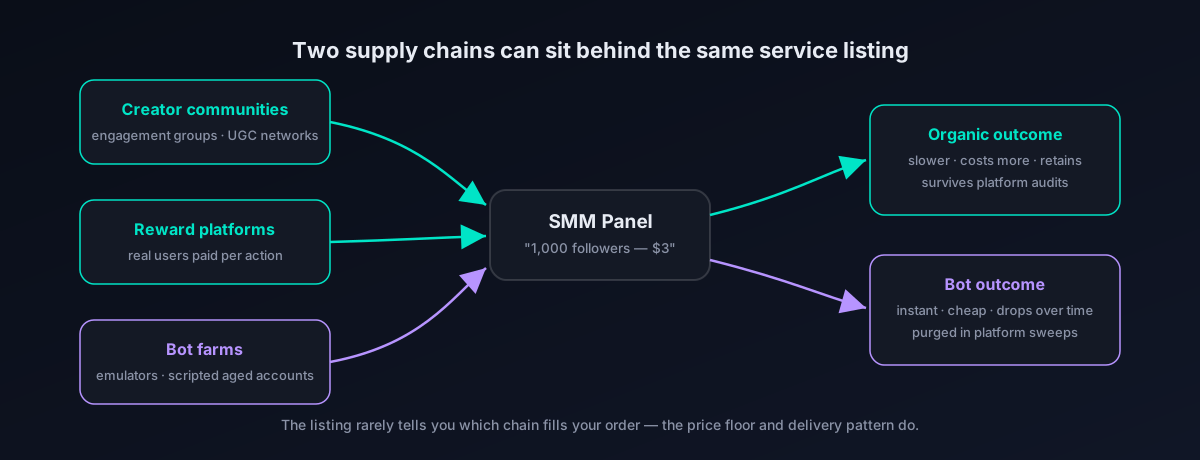
Platforms fight the bot chain at industrial scale — Meta actioned roughly 1.2 billion fake accounts in a single quarter according to the Meta Transparency Center — which is why bot-delivered counts erode: the accounts that followed you are being deleted on a rolling basis.
Organic vs. bot: side-by-side comparison
| Factor | Organic (real-user) | Bot (automated) |
|---|---|---|
| Typical price per 1K followers | $6 – $15+ | $0.50 – $2 |
| Delivery speed | Gradual: 3 – 14 days | Minutes to hours |
| 30-day retention | Typically 90%+ | 20% – 80%, purge-dependent |
| Profile quality | Posts, avatars, activity history | Empty or templated profiles |
| Ongoing engagement | Some follow-through possible | None |
| Audit survival (brands, monetization) | Generally passes | Fails fake-follower checks |
| Account risk | Low to moderate | Moderate to high |
Retention is the number that matters most and is advertised least. A $1.00 bot package that drops 60% costs you $2.50 per surviving follower — more than some organic listings — before counting the algorithmic damage of a falling follower count.
Why the difference decides your outcome
Monetization programs audit quality. YouTube's Partner Program requires 1,000 subscribers and 4,000 public watch hours, and it removes what it classifies as fake engagement before counting, per YouTube Help. TikTok's Creator Rewards Program requires 10,000 followers and 100,000 authentic views in 30 days. Bot inventory does not survive these filters — buyers chasing thresholds with bot supply reach the number and still fail the review.
Brands audit harder than platforms. Sponsor-side tools score audience authenticity before deals are signed; industry analyses by HypeAuditor consistently find suspicious followers on a meaningful share of Instagram accounts, and ad-fraud research firm CHEQ estimated influencer fraud costs advertisers $1.3 billion per year. An account padded with empty profiles is visibly padded to anyone who checks.
Algorithms divide, not add. Feed ranking keys on engagement rate — interactions divided by audience size. Ten thousand bot followers who never interact push that ratio toward zero and suppress your reach with the real audience you already had.
None of this means organic supply is "good" in platform-policy terms — purchased engagement of any kind sits outside most platforms' rules, as covered in our safety and legality guide. But the two tiers produce categorically different outcomes for retention, audits, and reach.
Five tests to identify what you're actually buying
- The price-floor test. Divide the price by 1,000 actions. Below ~$0.005 per follow, no human was paid — it is definitionally automated. Real-user supply starts around $5–$6 per 1,000 and is usually higher.
- The delivery-curve test. Order the minimum quantity and watch the pattern. A vertical spike of hundreds per hour is a bot batch; an irregular trickle over days is consistent with humans completing tasks.
- The profile-sampling test. Open 10 random new followers. Real users have posts, followers of their own, and activity gaps; bots show empty grids, templated bios, and creation dates clustered in the same week.
- The retention test. Record your count on delivery day and again on day 30. A drop above 10–15% means bot supply regardless of what the listing claimed. This single number settles most disputes.
- The refill-terms test. Organic suppliers can afford 30–60 day refill guarantees because their supply holds; pure bot sellers either omit refill terms or bury exclusions. Missing refill language on a "real followers" listing is a contradiction.
When bot volume still gets used
Honest framing: bot supply persists because some jobs only require visible numbers. Resellers fulfilling bulk marketplace orders, view-count seeding on launch videos, and cosmetic social proof for new pages are all use cases where buyers knowingly choose the cheap tier and accept drops. The failure mode is not using bot supply — it is paying bot prices while expecting organic outcomes, or building a monetization plan on inventory that will not pass review.
If your goal involves sponsors, monetization thresholds, sales, or long-term account health, the cheap tier works against you. If your goal is a number on a screen for a week, at least know that is what you bought. Price context per tier is in our pricing breakdown.
How verified organic providers are checked
Because "organic" is the most abused word in SMM marketing, SMMCollection maintains a separate verified organic zone where the claim is tested rather than taken from the listing. Verification is evidence-based: providers submit to delivery checks on live test orders, follower samples are reviewed for account history and activity, and retention is measured across a holding window before a provider is listed. Panels that fail stay in the general directory with community reviews — they are not labeled organic.
The general rule extends beyond any one directory: trust claims that come with evidence and a written refill window, and treat every unverified "100% real" label as bot supply until a test order proves otherwise.
Frequently asked questions
What are organic SMM services?
Organic SMM services deliver engagement performed by real people with active accounts, typically sourced through engagement communities or reward platforms that compensate users per action. They cost more — usually $6–$15+ per 1,000 followers — deliver gradually, and retain above 90% because the accounts are genuine.
How can I tell if followers from a panel are real?
Sample 10 new followers and check for posts, personal follower counts, and irregular activity; then measure retention after 30 days. Real users hold above 90%, while bot batches drop 20–80%. A price below $2 per 1,000 is itself near-conclusive evidence of automation.
Why are organic SMM services more expensive?
Because each action requires paying or incentivizing a real person, organic supply has a hard cost floor around $0.005–$0.05 per action. Bot actions cost fractions of a cent to produce. The 5–20x retail price gap directly reflects that production cost difference.
Do bot followers hurt your account?
Usually, yes. Bot followers never engage, so your engagement rate falls and feed algorithms reduce your reach. They also fail brand and monetization audits, and platform purge sweeps make counts visibly drop — a worse look than slower genuine growth.
Are organic SMM services allowed by Instagram and TikTok?
No purchased engagement is formally allowed — platform rules such as Instagram's Community Guidelines ban inauthentic activity regardless of whether humans or bots performed it. Organic supply carries lower detection and audit risk, not policy approval.
Final thoughts
Organic vs. bot is not a marketing nuance — it is two different products with different economics, different survival rates, and different consequences. The listing will not tell you which you are buying, but the price floor, the delivery curve, the follower profiles, and the refill terms will. Run the five tests on any new supplier, start with the verified organic zone if real-user delivery is what you need, and measure retention at day 30 — it is the one number nobody can fake.