An SMM panel (social media marketing panel) is a web dashboard that sells social engagement — followers, likes, views, comments, and subscribers — for platforms such as Instagram, TikTok, YouTube, and Telegram. You paste a public link, choose a service, and pay per 1,000 units; automated provider networks then fill the order, usually within minutes to a few days.
That is the short answer. The longer answer — where the engagement actually comes from, why the same service costs $0.50 on one panel and $15 on another, and when a panel is the wrong tool entirely — is what this guide covers. Everything below is based on pricing and delivery data from the 5,200+ services across 26 platforms tracked on SMMCollection.
Key takeaways
- An SMM panel is a self-serve storefront for bulk social engagement, priced per 1,000 units.
- Most panels resell from upstream providers — few generate engagement themselves.
- Tracked panel prices for Instagram followers span $0.50 to $15+ per 1,000, a 30x spread.
- Price differences map to quality tiers: bot, mixed, and real-user (organic) supply.
- Panels deliver raw numbers, not customers — pair them with real content strategy.
In this guide
- What is an SMM panel?
- How does an SMM panel work?
- What you can order, and what it costs in 2026
- Why identical services have wildly different prices
- Who actually uses SMM panels
- What panels do well — and where they fail
- How to evaluate a panel before ordering
- Frequently asked questions
What is an SMM panel?
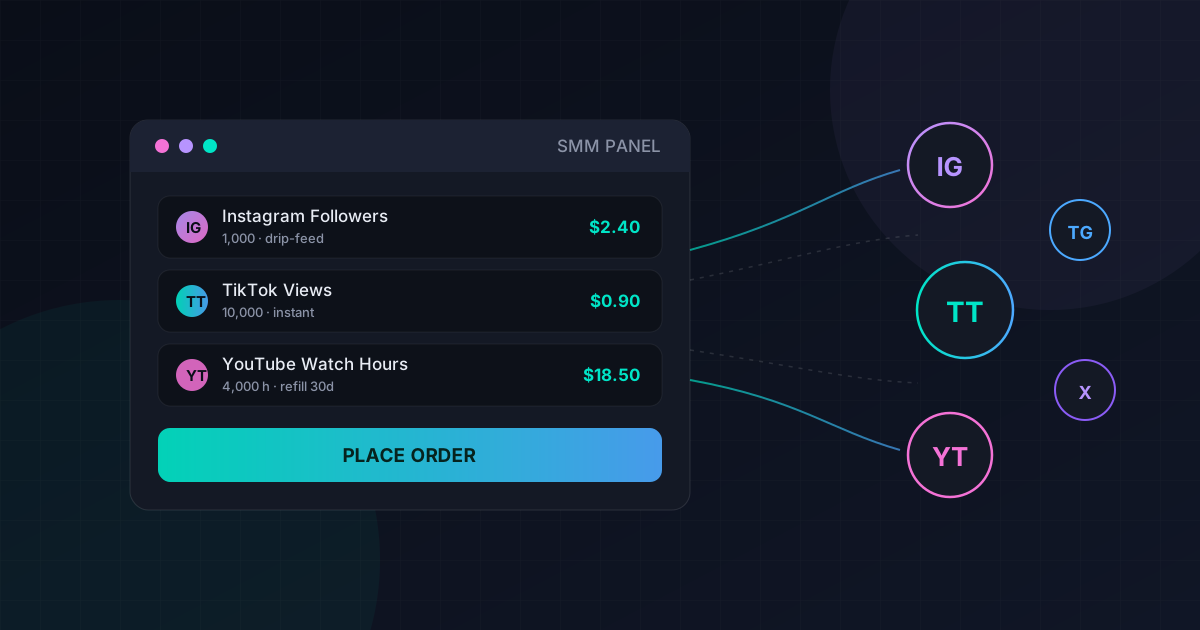
An SMM panel is an e-commerce site with one product category: social media engagement sold in bulk. Instead of product listings, you see service listings — "Instagram Followers | Max 50K | Refill 30D" — each with a price per 1,000 units, a minimum and maximum order size, and a delivery estimate.
The market behind these dashboards is large because social media itself is. With more than 5.2 billion social media user identities active worldwide according to DataReportal, visible follower and view counts have become a currency of credibility — and panels sell that currency directly.
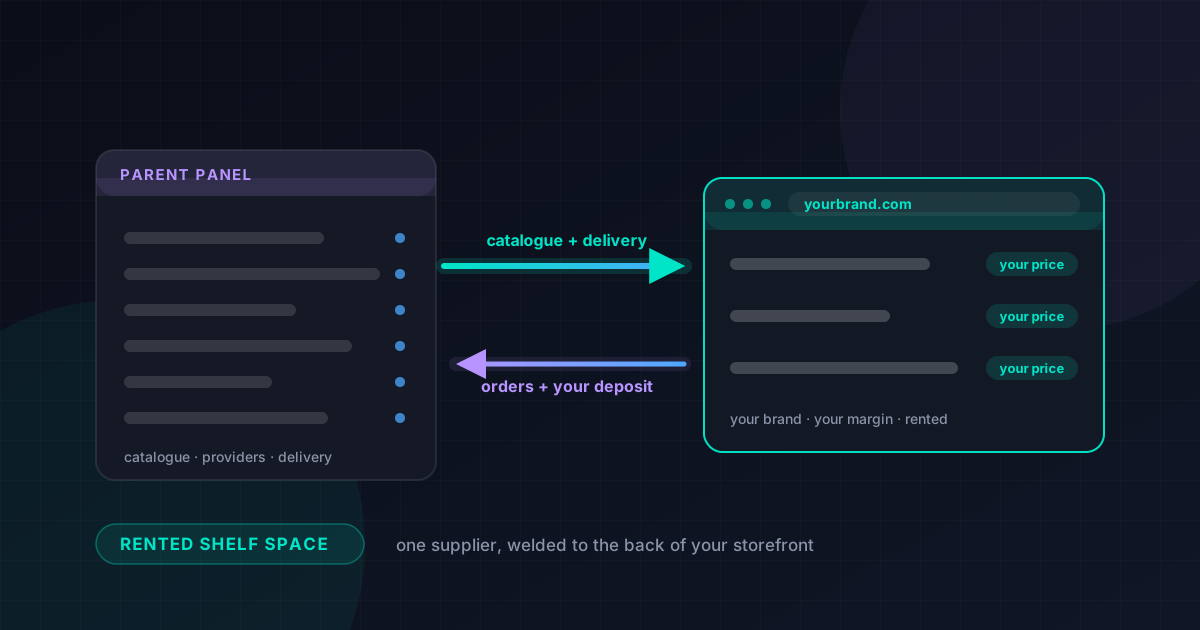
Most panels run on off-the-shelf panel software (PerfectPanel and similar scripts), which is why hundreds of panels look nearly identical. The software handles the storefront, wallet, and order queue; what differs between panels is the supply behind the listings and the honesty of the operator.
How does an SMM panel work?
Every panel order follows the same four-step pipeline:
- You place an order. Paste a public profile or post URL, select a service, and pay from a prepaid wallet balance — typically funded by card or cryptocurrency.
- The panel queues and routes it. The order enters an automated queue. Panels rarely fill orders themselves; the system forwards your job upstream through an API.
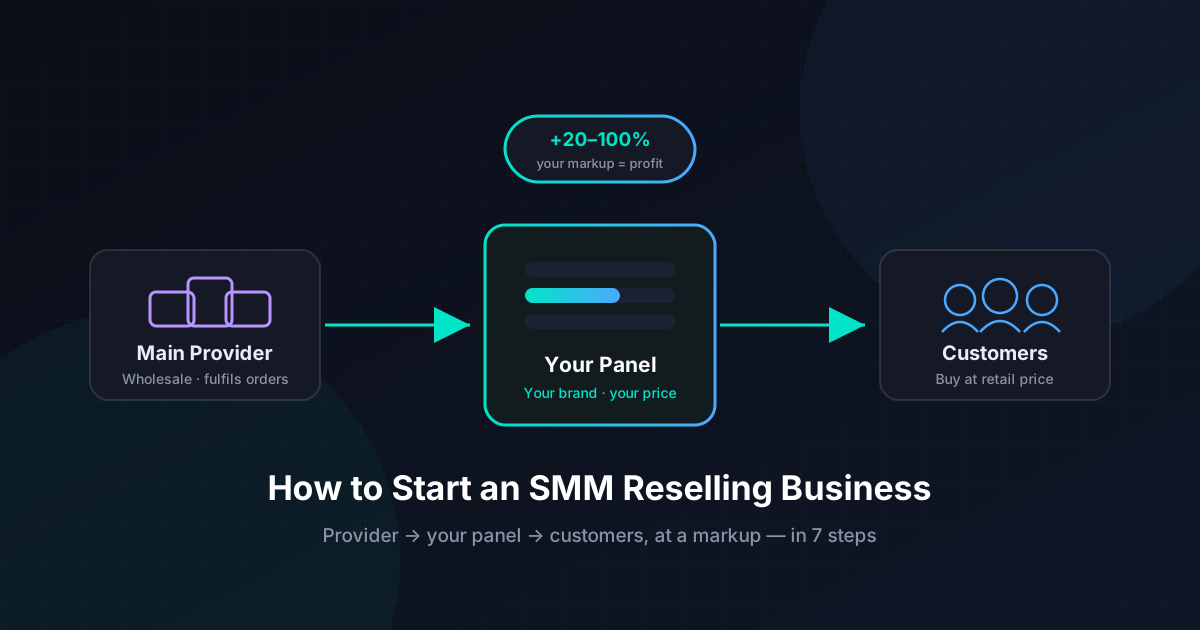
- Providers fill the order. Upstream providers — bot networks, engagement communities, or reward platforms — perform the actions. One order may pass through two or three resellers before reaching the source.
- Delivery appears on your profile. Counts rise either instantly or gradually ("drip-feed"), depending on the service configuration.
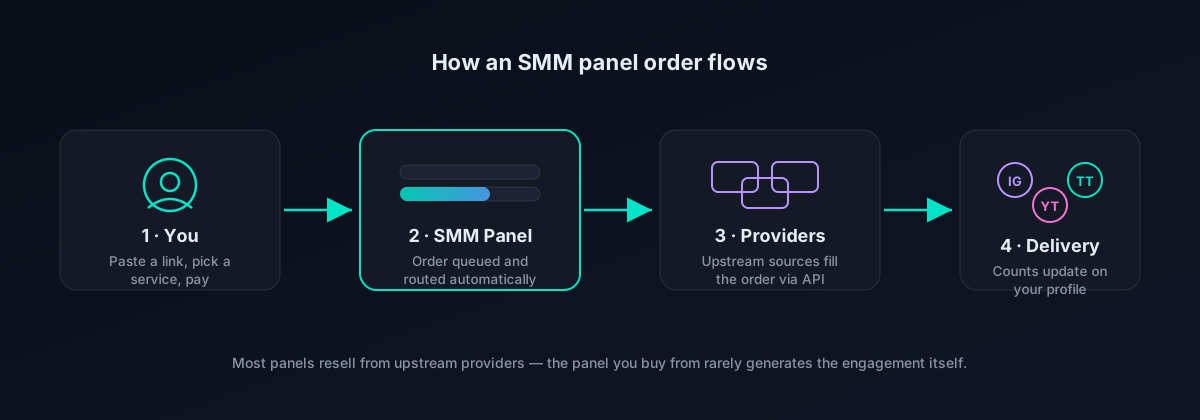
The reseller chain is the single most important thing to understand about how SMM panels work. The panel you buy from is usually a storefront, not a factory. Two panels with different branding may route to the same upstream source — or the same-looking listing may route to completely different quality tiers. This is why telling organic supply from bot supply matters more than panel branding.
What you can order, and what it costs in 2026
Across the services indexed on SMMCollection's panel directory, listings cluster into five families. Typical 2026 price ranges per 1,000 units:
| Service family | Examples | Typical price / 1K | Typical delivery |
|---|---|---|---|
| Followers / subscribers | Instagram, TikTok, X, Telegram members | $0.50 – $15+ | 1 hour – 3 days |
| Views | TikTok, Reels, YouTube, Story views | $0.05 – $5 | minutes – 24 h |
| Likes / reactions | Post likes, Telegram reactions | $0.30 – $8 | minutes – 24 h |
| Comments | Random, custom-text, AI-written | $5 – $80 | 1 – 48 h |
| Platform-specific | YouTube watch hours, Spotify plays, Twitch viewers | $1 – $40 | 1 – 30 days |
Ranges are wide because each family spans bot-generated, mixed, and real-user supply. A useful mental anchor: services priced below roughly $1 per 1,000 followers cannot involve meaningful human time at any wage on earth — the arithmetic only works with automation.
Why identical services have wildly different prices
The 30x spread between the cheapest and most expensive "Instagram Followers" listing is not noise — it is the market pricing three different products under one label:
- Bot tier ($0.50–$2): scripted accounts with no posts and no activity. Fast, cheap, and prone to drops when platforms run purge sweeps — Meta alone actioned about 1.2 billion fake accounts in a single quarter, per the Meta Transparency Center.
- Mixed tier ($2–$6): aged or semi-active accounts blended with bots. Better retention, still not real audience.
- Organic tier ($6–$15+): real people acting through engagement communities or reward platforms. Slower, costlier, and far more durable.
We unpack the economics of each tier — including refill guarantees and why "cheapest" usually costs more per surviving follower — in SMM panel pricing explained.
Who actually uses SMM panels
Four buyer groups account for most panel volume:
- Resellers. The largest group. They buy at panel rates and resell on marketplaces or to local clients at 2–10x markup, often via the panel's API.
- Agencies. Social media agencies use panels to supplement client campaigns — usually for view counts and initial social proof rather than follower totals.
- Creators. Individuals pushing toward visibility thresholds, since platform algorithms and brand deals both key on visible numbers. YouTube's Partner Program, for example, requires 1,000 subscribers plus 4,000 public watch hours, per YouTube Help.
- Panel operators themselves. Panels buy from other panels; arbitrage between price tiers is a business model of its own.
What panels do well — and where they fail
Where panels deliver: speed and cost. No other channel produces visible numbers at $1–$5 per 1,000 within hours. For social proof (making a new profile look established), seeding view counts on launch content, or reselling at markup, panels do exactly what they claim.
Where they fail: panels sell metrics, not attention. Purchased followers do not watch, click, or buy — so engagement rate falls as follower count rises, which algorithms read as a negative signal. Purchased engagement also sits against most platforms' inauthentic-activity rules, with consequences ranging from metric removal to account restriction — the full risk picture is in our SMM panel safety guide.
The practical rule: panels can decorate a strategy; they cannot be one.
How to evaluate a panel before ordering
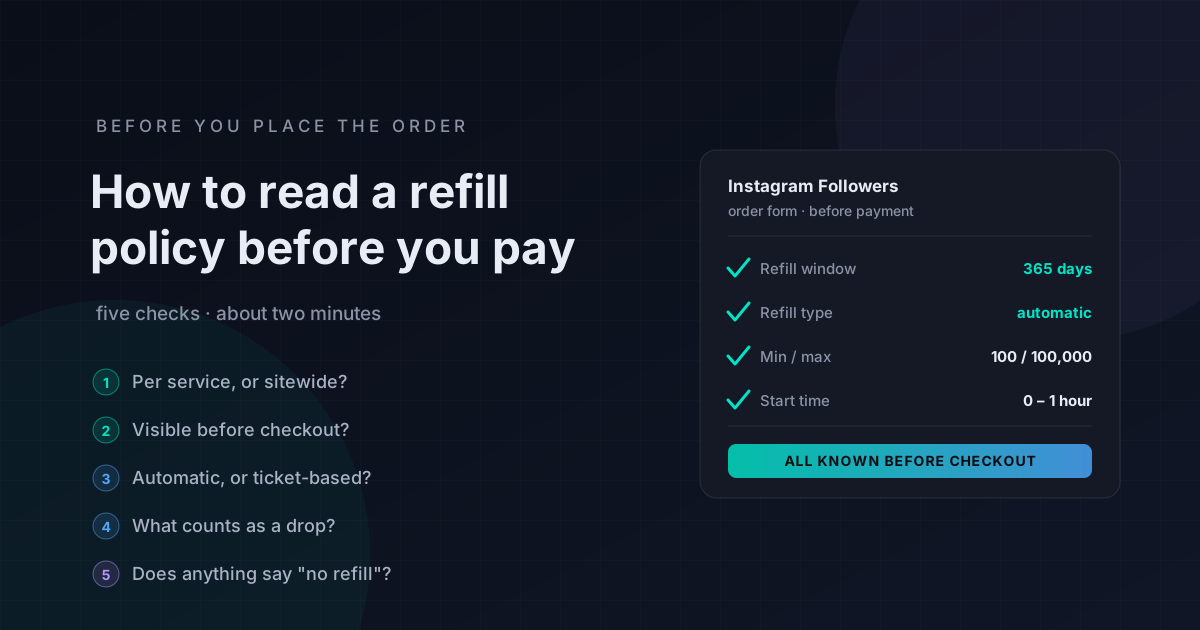
Panel quality varies more than in almost any other software category, and storefronts look identical. Before funding a wallet, check five things:
- Independent reviews — on a neutral directory, not the panel's own testimonial wall.
- Refill / refund terms — written, with a stated window (e.g. "refill 30 days").
- No password requests — legitimate services only ever need a public URL.
- Live, current prices — stale price lists signal an unmaintained panel.
- A small test order — $5 spent testing beats $50 lost guessing.
This is the problem SMMCollection exists to solve: the directory tracks panels with synced live pricing and community reviews, and the verified organic zone lists providers that passed evidence-based checks of real-user delivery. For a deeper vetting walkthrough, see the complete panel selection checklist.
Frequently asked questions
What does SMM panel mean?
SMM panel stands for "social media marketing panel" — a self-serve website selling bulk social engagement such as followers, likes, views, and comments. Services are priced per 1,000 units and delivered automatically after you submit a public profile or post link.
Are SMM panels legal?
Operating or buying from an SMM panel is not a criminal offense in most jurisdictions, but purchased engagement violates most platforms' terms of service, and US regulators restrict selling fake indicators for commercial use. Legality and platform risk are separate questions — our safety guide covers both.
How much does an SMM panel cost?
Most SMM panels have no subscription fee; you prepay a wallet and spend per order. Across panels tracked on SMMCollection, 1,000 Instagram followers cost $0.50–$15+, 1,000 TikTok views as little as $0.05, and 1,000 custom comments $5–$80, depending on quality tier.
Do SMM panels deliver real followers?
Only some. Most low-priced listings are filled by automated accounts; real-user (organic) supply exists but costs several times more and delivers gradually. Price floors, delivery speed, and refill terms are the practical signals for telling the two apart.
How fast do SMM panel orders arrive?
Views and likes often start within minutes; followers typically deliver over 1 hour to 3 days; slow services like YouTube watch hours can take up to 30 days. Reputable panels offer drip-feed delivery, which spreads units over time to look natural.
What is the difference between an SMM panel and an SMM provider?
A provider generates engagement at the source; a panel is a storefront that resells provider inventory through an API. Many panels resell other panels, so one order can pass through several layers — each adding margin without changing the underlying quality.
Final thoughts
An SMM panel is a vending machine for social metrics: fast, cheap, and exactly as valuable as visible numbers are to your goal — which is sometimes genuinely valuable, and sometimes zero. Treat listings skeptically, understand which supply tier you are buying, and never judge a panel by its storefront. Start with live panel data and community reviews, compare prices across the tiers above, and test small before you spend big.