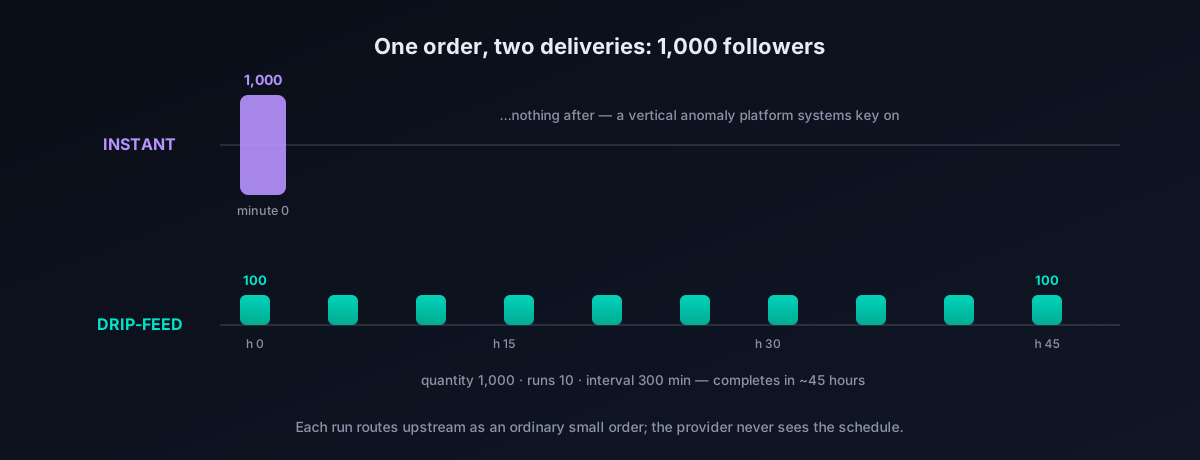
Drip-feed is an SMM panel delivery mode that splits an order into small batches released on a schedule, instead of delivering everything at once. A 1,000-follower order might arrive as 100 followers every 5 hours over two days. Buyers set three parameters — total quantity, quantity per run, and interval — and the panel automates the rest.
Every panel sells the feature; almost none explain how to use it well. This guide covers the mechanics, the detection logic that makes gradual delivery matter, what speeds actually read as natural in 2026, and the cases where drip-feed is the wrong choice — based on delivery patterns across the 5,200+ services tracked on SMMCollection.
Key takeaways
- Drip-feed splits one SMM order into scheduled batches: quantity ÷ runs × interval.
- It exists because spikes trigger review — platforms flag anomalies, not round numbers.
- Drip-feed smooths the curve; it cannot upgrade bot accounts into real ones.
- Natural pacing for followers is roughly 1–3% of current audience per day.
- Launch-window views are the main case where instant beats drip-feed.
In this guide
- What is drip-feed in an SMM panel?
- How drip-feed works, step by step
- Why drip-feed exists: the anomaly problem
- Drip-feed vs instant delivery
- What delivery speed looks natural in 2026?
- Setting up a drip-feed order without mistakes
- What drip-feed cannot protect you from
- Frequently asked questions
What is drip-feed in an SMM panel?
Drip-feed (also written "dripfeed" or "drip feed") is a delivery configuration offered on most SMM panel services. Instead of one bulk delivery, the panel's system holds your order in a queue and releases it in equal portions at fixed intervals. Three fields define the schedule:
| Parameter | Meaning | Example |
|---|---|---|
| Quantity | Total units ordered | 1,000 followers |
| Runs | Number of batches | 10 runs |
| Interval | Minutes between batches | 300 min (5 h) |
That example delivers 100 followers every 5 hours and completes in roughly 45 hours. The same mechanism applies to likes, views, comments and members — any unit an SMM service sells can usually be dripped. The SMM glossary covers the neighboring terms (refill, non-drop) that panels list alongside it.
How drip-feed works, step by step
- You configure the schedule at checkout. Quantity, runs, interval — most panels cap runs (often 100) and set minimum intervals (often 1–60 minutes).
- The panel queues the order. The system creates one parent order and splits it into child deliveries, each triggered when its timer fires.
- Each run routes upstream. Every batch is passed to the provider network as a normal small order — the provider does not know or care that it is part of a schedule.
- Delivery completes or auto-cancels. If the provider runs dry mid-schedule, decent panels mark the remainder partial and refund the undelivered units to your balance.
Why drip-feed exists: the anomaly problem
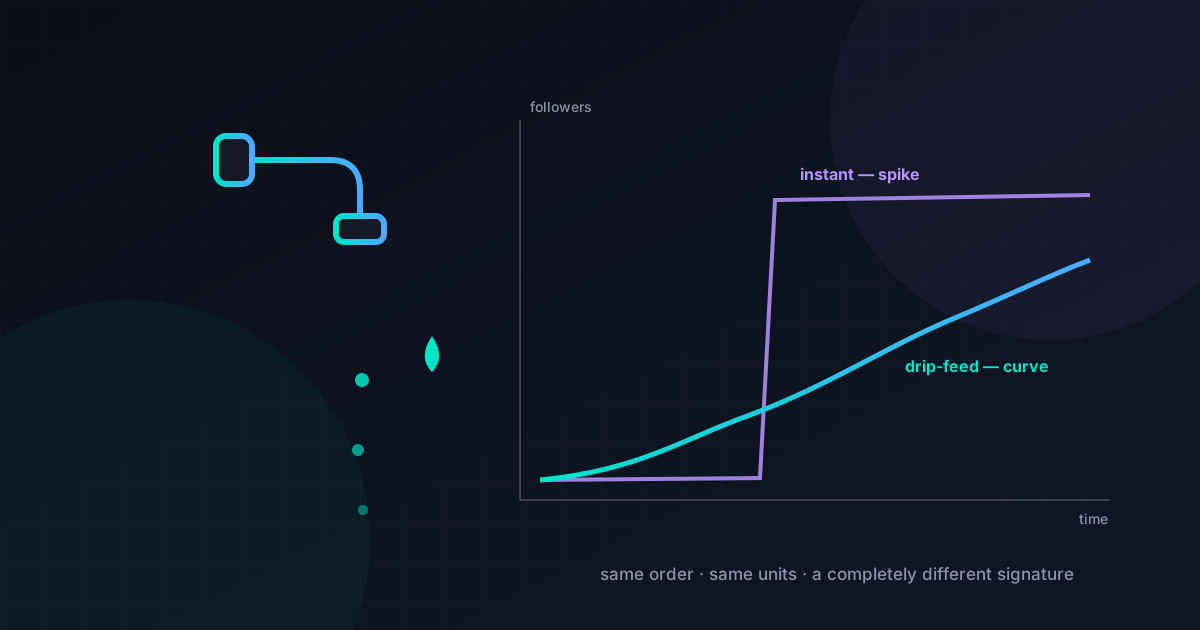
Platform integrity systems are anomaly detectors. An account that gains 2% of its audience per day for a month looks like growth; an account that gains 5,000 followers in an hour looks like a purchase. Meta actioned roughly 1.2 billion fake accounts in a single quarter per the Meta Transparency Center, and its enforcement documentation describes behavior-pattern signals — velocity among them — rather than simple thresholds.
Drip-feed is the buyer's answer to velocity analysis: it reshapes a purchase into a curve that resembles organic adoption. Platforms never publish exact trigger lines, so the entire practice is probabilistic — slower is safer, but no speed is "approved." Instagram's rules ban inauthentic activity at any velocity, per Instagram's Community Guidelines; drip-feed lowers visibility of the purchase, not the policy exposure covered in our safety guide.
Drip-feed vs instant delivery
| Factor | Drip-feed | Instant |
|---|---|---|
| Growth curve | Gradual, blends with baseline | Vertical spike |
| Detection profile | Lower velocity signal | Maximum velocity signal |
| Completion time | Hours to weeks | Minutes to hours |
| Best for | Followers, subscribers, members | Launch-window views, ratio likes |
| Price | Same or slight premium | Base rate |
| Refund complexity | Partial-fill scenarios possible | Simple: delivered or not |
The decision rule is simpler than most guides make it: audience metrics should drip; momentum metrics should not. Followers and channel members are stock numbers where spikes look synthetic. Views in a video's first hours are flow numbers where speed is the entire point — TikTok and YouTube evaluate early velocity when deciding distribution, so drip-feeding launch views cancels the effect you paid for.
What delivery speed looks natural in 2026?
No competitor guide commits to numbers, so here are the pacing guidelines that hold up across delivery data on tracked panels:
- Followers: 1–3% of current audience per day. A 2,000-follower account absorbing 40 new followers daily reads as strong organic growth; 400 daily reads as a purchase. Size-relative pacing matters more than absolute numbers.
- Likes: match your historical ratio. If posts normally earn likes equal to 3–5% of followers, dripping to that band over 24–48 hours stays inside your account's own pattern.
- Views: front-load or skip drip. For catalog (old) videos, spreading views over days is fine; for new posts, deliver within the first 24 hours or the algorithmic window closes.
- Comments: slowest of all. Real conversation trickles. A few comments per hour across 2–3 days outperforms 50 comments in ten minutes on every metric that matters.
One honest caveat: these are camouflage heuristics, not guarantees. Detection systems weigh account quality far more than arrival speed — which is why supply tier, covered in organic vs. bot services, decides more of your outcome than any interval setting.
Setting up a drip-feed order without mistakes
- Start from your baseline, not the order size. Check your last 30 days of growth and set daily delivery at 1–3x that rate, never 10x.
- Use irregular batch sizes where the panel allows. 90, 110, 95 reads better than 100, 100, 100 — some panels offer randomized runs for exactly this reason.
- Respect minimum intervals. Setting a 1-minute interval on 50 runs recreates the spike you were avoiding, one notch slower.
- Test with the minimum first. One small dripped order shows you the panel's real batch behavior before you schedule a month of delivery.
- Screenshot the schedule. Partial fills on dripped orders are the most disputed ticket type in panel reviews; a record of quantity/runs/interval settles claims fast.
What drip-feed cannot protect you from
Drip-feed changes when engagement arrives — nothing about what arrives. Empty bot profiles delivered slowly are still empty bot profiles: they fail brand audits, drop during purge sweeps (20–80% for bot-tier followers versus 90%+ retention for verified real-user supply), and contribute nothing to engagement rate. It also does not reduce policy exposure: purchased engagement violates platform rules at any speed, and YouTube strips what it classifies as fake engagement regardless of delivery pattern, per YouTube Help.
Treat drip-feed as presentation, not protection. The substantive risk decisions — panel selection, supply tier, payment containment — live upstream of the delivery schedule, in the directory data and the verified organic zone.
Frequently asked questions
What is drip-feed in an SMM panel?
Drip-feed is a delivery mode that splits an SMM order into scheduled batches instead of one instant delivery. You set total quantity, number of runs, and the interval between them — for example 1,000 followers as 100 every 5 hours — and the panel automates the schedule.
How does drip-feed work?
The panel holds your order in a queue and releases equal portions at your chosen interval. Each batch routes to the provider network as a normal small order until the total completes. Decent panels refund undelivered units if a provider runs dry mid-schedule.
Is drip-feed safer than instant delivery?
Drip-feed lowers the velocity signal that platform anomaly detection watches, so it reduces the visibility of a purchase. It does not change account quality or policy exposure — slowly delivered bot followers still drop, still fail audits, and still violate platform rules.
What drip-feed speed should I use for followers?
Pace follower delivery at roughly 1–3% of your current audience per day, matched against your last 30 days of baseline growth. Size-relative speed matters more than absolute numbers: 40 daily followers looks organic on a 2,000-follower account and synthetic on a 200-follower one.
When should I not use drip-feed?
Skip drip-feed for launch-window views. TikTok and YouTube weigh a video's early velocity when deciding distribution, so spreading views across a week cancels the algorithmic effect. Momentum metrics need speed; audience metrics like followers and members need gradual delivery.
Does drip-feed cost more?
Usually no — most panels offer drip-feed at the base service rate as a checkout option. Some premium services charge a small margin for randomized batch sizes or long schedules. Partial-fill refund policies matter more than price: read them before scheduling large dripped orders.
Final thoughts
Drip-feed is the difference between a growth curve and a growth cliff: same units, same cost, completely different signature. Configure it from your account's own baseline, drip audience metrics, front-load momentum metrics, and remember its honest scope — it shapes how a purchase looks, never what a purchase is. Supply quality decides outcomes, and that decision starts with live panel data and reviews rather than a delivery slider.